A Guide for Japanese Companies in Germany to Navigate Legal Complexities
The rise of remote work has transformed the global business landscape, offering Japanese companies operating in Germany unprecedented opportunities to tap into international talent pools, reduce operational costs, and enhance employee satisfaction through flexible arrangements like “workations.” For Japanese firms, remote work can be a game-changer in Germany’s competitive market, enabling access to specialized skills in industries such as automotive, technology, and manufacturing. However, cross-border remote work introduces a web of legal complexities—spanning taxation, social security, labor law, immigration, and data protection—that can catch unprepared companies off guard. Non-compliance risks financial penalties, legal disputes, and reputational damage, all of which can undermine a Japanese company’s success in Germany.
This article, tailored specifically for Japanese businesses, explores the key legal challenges of cross-border remote work and provides practical, actionable solutions to ensure compliance in 2025. Drawing on real-world insights, we’ll guide you through the intricacies of German and EU regulations, helping you unlock the full potential of remote work while staying on the right side of the law.
Tax Pitfalls: Navigating Double Taxation and Permanent Establishment Risks
For Japanese companies employing remote workers in Germany or abroad, tax compliance is a critical concern. When employees work remotely from another country, they may become subject to taxation in that jurisdiction, depending on local tax laws and bilateral agreements. Germany’s double taxation agreements (DTAs) with countries like Japan, the United States, or other EU nations provide some clarity through the 183-day rule. Under this rule, if an employee spends fewer than 183 days in a foreign country, is paid by a German employer, and the employer has no permanent establishment (PE) in that country, the employee remains taxable in Germany. However, exceeding this threshold or performing activities like concluding contracts abroad can trigger foreign tax obligations, leading to the risk of double taxation.
Moreover, remote work can inadvertently create a permanent establishment in the employee’s country of residence, subjecting the company to corporate taxes in that jurisdiction. For Japanese firms, this is particularly relevant when employees work from countries with stricter tax regimes, such as France or Spain. For example, a Japanese company’s employee working remotely from Spain for extended periods could trigger a Spanish tax audit, resulting in unexpected corporate tax liabilities.
Solution: Japanese companies must conduct thorough tax assessments before approving remote work arrangements. Engage tax advisors familiar with German and international tax laws to review DTAs and assess PE risks. Document employee work locations and activities to ensure compliance with the 183-day rule.
Social Security and Labor Law: Striking a Balance
Navigating social security and labor laws is another challenge for Japanese companies managing remote workers in Germany. Within the EU, Regulation (EC) No. 883/2004 governs social security coordination, allowing employees to remain under German social security for short-term workations (typically up to four weeks). Bilateral agreements, such as those between Germany and Japan offer additional flexibility, enabling employees to stay insured in Germany if their remote work abroad is limited. However, outside the EU, local social security obligations often apply immediately, requiring contributions to foreign systems or private insurance schemes in countries like the United States or Singapore.
Labor law adds further complexity. Within the EU, the Rome I Regulation determines the applicable law, often defaulting to German law for short-term assignments. However, a favorability comparison ensures that employees benefit from more favorable local standards, such as higher minimum wages or better leave entitlements. Outside the EU, local labor laws—covering working hours, vacation, or termination rights—may take precedence, creating compliance challenges for Japanese companies unfamiliar with these regulations.
Solutions:
Obtain an A1 certificate from the German Pension Insurance Agency (Deutsche Rentenversicherung) for each employee’s trip abroad. This document confirms that the employee remains under German social security, protecting against disputes or penalties in cases like workplace accidents.
Draft employment contracts that explicitly define the applicable law and jurisdiction, tailored to the employee’s work location and duration.
Monitor local labor laws in non-EU countries, consulting with legal experts to ensure compliance with mandatory provisions.
Immigration and Visa Requirements: Ensuring Legal Work Abroad
For Japanese companies, immigration compliance is a critical aspect of cross-border remote work. Within the EU, European Economic Area (EEA), and Switzerland, employees benefit from freedom of movement, requiring only a valid ID for short-term workations. However, outside the EU, visa requirements can complicate remote work. Countries like Canada, Australia, or Thailand have introduced “remote work visas” to regulate extended stays by digital nomads. Failure to secure the appropriate visa can result in civil or criminal penalties, affecting both the employee and the company.
For Japanese employees seconded to Germany, additional considerations apply. Germany’s immigration laws require specific work permits for non-EU nationals, and remote work from third countries may impact their visa status. Japanese companies must ensure that employees’ immigration statuses align with their remote work arrangements.
Solution: Before approving remote work abroad, verify visa and permit requirements for the employee’s destination. Work with immigration specialists to secure necessary documentation, particularly for non-EU countries, and ensure compliance with German residency rules for Japanese expatriates.
Data Protection: Safeguarding Information in a Global Context
Data protection is a cornerstone of compliance for Japanese companies operating in Germany, where the General Data Protection Regulation (GDPR) sets stringent standards. When employees work remotely from within the EU, GDPR applies uniformly. However, remote work from non-EU countries introduces additional challenges, as local data protection laws may conflict with or fall short of GDPR standards. For example, countries like India or Brazil may have less robust data protection frameworks, increasing the risk of non-compliance.
Moreover, remote work heightens cybersecurity risks, particularly in regions with high rates of cybercrime. Japanese companies must assess two key factors:
Local Data Protection Standards: Are the destination country’s laws GDPR-equivalent? If not, additional safeguards like Standard Contractual Clauses (SCCs) are required for data transfers.
IT Security Risks: Remote work from high-risk regions (e.g., countries with frequent cyberattacks or geopolitical instability) increases the likelihood of data breaches.
If e.g. a company allowed employees to work from a non-EU country without implementing secure VPNs, a data breach compromising sensitive client information would have a disastrous outcome leading to hefty GDPR fines and reputational damage. All of which could have been prevented with robust IT security measures.
Solutions:
Apply GDPR standards universally, even for employees in non-EU countries, to ensure consistency.
Use secure IT infrastructure, such as VPNs and encrypted communication tools, to protect data during remote work.
Assess geopolitical risks by consulting travel advisories from Germany’s Federal Foreign Office or Japan’s Ministry of Foreign Affairs, avoiding high-risk regions for remote work.
Practical Strategies for Japanese Companies to Stay Compliant
To navigate the complexities of cross-border remote work, Japanese companies in Germany can adopt the following strategies:
Develop Clear Remote Work Policies: Define approved countries, maximum stay durations, and permissible activities. Involve HR and legal teams to ensure policies align with German and international regulations.
Conduct Case-by-Case Assessments: Evaluate each employee’s remote work arrangement individually, considering tax, social security, labor, and immigration implications. Use technology to track work locations and build a knowledge database for future decisions.
Engage Specialized Advisors: Partner with legal and tax consultants experienced in advising Japanese companies in Germany. Their expertise in cross-border compliance is invaluable for navigating cultural and regulatory nuances.
Prioritize Data Protection: Establish GDPR-compliant processes, assess destination countries for data protection and cybersecurity risks, and implement secure IT solutions like VPNs.
Secure A1 Certificates: Apply for an A1 certificate for every employee working abroad, ensuring social security compliance and protection against unforeseen liabilities.
Train Leadership and HR Teams: Educate Japanese and German staff on the legal risks of remote work, bridging cultural gaps in understanding labor and compliance expectations.
Why Act Now? The Urgency for Japanese Companies
German authorities are intensifying scrutiny of remote work arrangements, driven by evolving regulations and increased cross-border collaboration among tax and social security agencies. For Japanese companies, non-compliance risks not only financial penalties but also damage to their reputation as reliable partners in Germany’s business ecosystem. Proactive compliance is a strategic investment, enabling Japanese firms to leverage remote work’s benefits—global talent access, cost savings, and employee satisfaction—while safeguarding their operations.
Conclusion: Seize the Opportunities, Mitigate the Risks
Cross-border remote work offers Japanese companies in Germany a powerful tool to compete in a globalized economy. By addressing the legal complexities of taxation, social security, labor law, immigration, and data protection, you can unlock these opportunities while ensuring compliance. Clear policies, expert guidance, and robust IT security are your allies in this journey. For Japanese businesses, mastering remote work is not just about avoiding risks—it’s about building a flexible, resilient, and successful presence in Germany and beyond.
Roman Koudous is a seasoned attorney with extensive experience in international business law. Based in Berlin and Tokyo, he supports Japanese companies across various legal matters including labor law, corporate formation, contract negotiation, and M&A.; His firm provides comprehensive legal support tailored to industries such as tech, pharmaceuticals, fashion, and automotive.
YS Global Search was founded in February 2024 in Duisburg, Germany. Based on our vision, mission and values, we provide the best talent acquisition experience to our clients and the best career consulting experience to our candidates. We specialize in headhunting and executive search for local management positions in Europe, especially Germany. We are not just a recruitment company that delivers a pool of candidates to our clients and a job to our candidates. We promise to be a business partner to our clients, enhancing and strengthening their organization through the introduction of experienced and professional talent. We also promise to be a lifelong career development partner to our candidates, supporting their growth and satisfaction throughout their career milestones.
Yu Shimokawa
International Executive Recruitment Specialist for local management placements in Germany
15 years of experience as executive search, recruitment, and headhunting consultants in
Tokyo, Japan for 1 year
Bangkok, Thailand for 10 Years
Düsseldorf, Germany for 4+ Years
Currently based in Duisburg, Germany
Please do not hesitate to contact us if you have any questions regarding recruitment in Germany/Europe. We will be happy to provide you with the latest market trends and information based on our own recent recruitment experience.
Unlocking the Power of Freelancers in Germany: A Guide for Japanese Companies to Avoid the Pitfalls of Bogus Self-Employment
Since the COVID-19 pandemic, collaborating with freelancers has become an increasingly attractive option for businesses worldwide, including Japanese companies expanding their operations in Germany. The flexibility of engaging freelancers—without the burden of fixed personnel costs, social security contributions, or long-term commitments—offers clear advantages. For Japanese firms navigating the competitive German market, freelancers provide a cost-effective way to access specialized skills, particularly in industries like IT, engineering, and consulting. However, beneath these benefits lies a significant risk: the concept of Scheinselbstständigkeit (bogus self-employment) in Germany. This legal pitfall can lead to severe financial, legal, and reputational consequences if not addressed properly. For Japanese companies unfamiliar with German labor laws, understanding and mitigating this risk is critical to thriving in the European market.
In this article, we’ll explore what bogus self-employment entails, why it’s particularly treacherous in Germany, and how Japanese companies can structure freelancer engagements to ensure compliance while maximizing benefits. Drawing on practical insights and real-world examples, we’ll provide actionable strategies tailored to Japanese businesses operating in Germany.
Table of Contents
What is Bogus Self-Employment, and Why Should Japanese Companies Care?
In Germany, Scheinselbstständigkeit occurs when a freelancer is formally self-employed but operates under conditions that resemble those of a permanent employee. German authorities, including social security agencies and tax offices, scrutinize such arrangements to ensure compliance with labor and tax laws. For Japanese companies accustomed to more flexible labor markets, this concept can be a surprising and costly hurdle. Especially as the Japanese equivalent “業務委託 (Gyomu-Itaku)“ is very common.
Key indicators of bogus self-employment include:
Integration into the Company’s Structure: The freelancer works on-site, uses company equipment, and follows fixed working hours, much like an employee.
Dependence on a Single Client: The freelancer relies solely or primarily on your company for income, lacking the diversity of clients typical of a true entrepreneur.
Lack of Entrepreneurial Risk: The freelancer does not invest in their own tools, marketing, or client acquisition, which are hallmarks of genuine self-employment.
Subordination to Instructions: The freelancer receives detailed directives from your company, resembling an employer-employee relationship.
For Japanese firms, the stakes are high. If authorities determine that a freelancer is falsely self-employed, the company faces retroactive obligations as if the freelancer were an employee. These include social security contributions, income tax withholding, and employee rights such as paid leave or termination protection. Penalties can extend back four years—or up to 30 years in cases of intentional misconduct. Beyond financial penalties, managing directors may face personal liability, including criminal charges for tax evasion or social security fraud. Additionally, reputational damage can erode trust with German partners, clients, and stakeholders, which is particularly detrimental for Japanese companies building credibility in the European market.
The pandemic exacerbated this issue. Remote work and economic uncertainty normalized freelancer engagements, but German authorities have since intensified their scrutiny. Japanese companies, often unfamiliar with the nuances of EU labor laws, are particularly vulnerable to unintentional violations.
A Cautionary Tale: The Cost of Non-Compliance
Consider a real-world example from our consulting practice, adapted to reflect challenges faced by any company in the German market. A mid-sized tech firm operating in Germany engaged several “freelancers” to support its software development projects. These freelancers, primarily based in Germany and other EU countries like Poland and Spain, worked exclusively for the company, used its equipment, and followed its project timelines. During a routine audit by German social security authorities, red flags were raised. The auditors coordinated with foreign tax agencies, uncovering a pattern of bogus self-employment. The result? The company faced a six-figure penalty, covering retroactive social security contributions and taxes. Only through extensive negotiations and robust legal arguments did we avoid criminal proceedings against the managing director for alleged social security fraud.
This case is not an outlier. Japanese companies, often accustomed to more lenient regulations in other markets, may inadvertently replicate non-compliant practices in Germany. The consequences can jeopardize not only financial stability but also long-term growth in the EU.
The International Context: Why Employer of Record Models Don’t Work in Germany
Japanese companies operating globally may be familiar with Employer of Record (EOR) services, such as those offered by platforms like Deel or Remote. In markets like the United States, EORs act as the legal employer for freelancers, handling payroll, taxes, and compliance to reduce the client company’s liability. For Japanese firms, EORs offer a convenient way to scale operations without navigating local labor laws.
However, Germany—and the broader EU—operates differently. EOR models are not recognized under German law, and the client company remains directly liable for any misclassification of freelancers. Attempting to apply EOR frameworks in Germany often fails due to stringent national regulations, leaving Japanese companies exposed to the risks of bogus self-employment. This regulatory divergence underscores the need for tailored compliance strategies when operating in Germany.
The Risks in Detail: Financial, Legal, and Reputational Impacts
For Japanese companies, the consequences of bogus self-employment extend beyond finances:
Financial Penalties: Retroactive social security contributions and taxes can accumulate rapidly, often reaching six or seven figures. Small and medium-sized companies, in particular, may struggle to absorb such costs.
Legal Repercussions: Managing directors can face personal liability, including fines or criminal charges for tax evasion or social security fraud. This is especially concerning for Japanese executives seconded to Germany, who may be unaware of their personal exposure.
Reputational Damage: Being labeled a “social fraudster” can alienate German clients, partners, and talent, undermining the trust that Japanese companies work hard to build in the EU market.
Employee Rights Claims: Freelancers reclassified as employees can demand benefits such as paid leave, overtime pay, or severance. In one real case from our practice, a freelancer who was “terminated” after years of working exclusively for a company successfully claimed a substantial settlement, as the company had failed to establish clear boundaries.
These risks are particularly acute for Japanese companies, which may face additional scrutiny as foreign entities navigating Germany’s complex regulatory landscape.
Practical Strategies for Japanese Companies to Mitigate Risks
While the risks are significant, Japanese companies can take proactive steps to structure freelancer engagements compliantly.
Craft Clear Contracts: Work with German legal experts to draft contracts that emphasize the freelancer’s independence. Avoid clauses implying subordination, such as fixed working hours or mandatory reporting structures. Specify that the freelancer provides their own tools and works autonomously.
Encourage Multiple Clients: Advise freelancers to work for other clients to demonstrate their entrepreneurial status. This reduces the perception of dependency on your company, a key criterion for German authorities.
Seek Status Determination: Request a status assessment (Statusfeststellungsverfahren) from the German Pension Insurance Agency (Deutsche Rentenversicherung). This process provides legal clarity on whether a freelancer is genuinely self-employed, offering protection against future disputes.
Ensure Entrepreneurial Risk: Verify that freelancers bear their own business risks, such as investing in equipment, marketing, or client acquisition. This distinguishes them from employees who rely on the company’s infrastructure.
Train Your Team: Educate your HR and management teams—both in Japan and Germany—about the risks of bogus self-employment. Cultural differences in labor practices can lead to unintentional violations, so awareness is key.
Document Independence: Maintain records showing the freelancer’s autonomy, such as their use of personal email domains, separate office spaces, or self-managed schedules. These details can be critical during audits.
Engage Local Expertise: Partner with German legal and tax advisors who understand both German regulations and the needs of Japanese businesses. Their guidance can help bridge cultural and regulatory gaps.
Why Act Now? The Urgency for Japanese Companies
German authorities are intensifying their oversight, driven by stricter regulations and evolving case law. Recent amendments to Germany’s Temporary Employment Act (Arbeitnehmerüberlassungsgesetz, AÜG) have further tightened rules around freelancer engagements, particularly in relation to EOR-like arrangements. For Japanese companies, the cost of non-compliance far outweighs the effort of prevention. Proactive measures not only safeguard your operations but also position your company as a compliant and trustworthy partner in the German market.
Whether you’re a Japanese startup entering Germany or an established corporation expanding your EU footprint, addressing bogus self-employment risks is non-negotiable. Prevention is not just cost-effective—it’s a strategic investment in your company’s success.
Conclusion: Seize the Opportunity, Mitigate the Risks
Collaborating with freelancers offers Japanese companies a powerful tool to compete in Germany’s dynamic market. By understanding and addressing the risks of Scheinselbstständigkeit, you can harness the flexibility of freelancers while ensuring compliance with German laws. Clear contracts, proactive status assessments, and local expertise are your allies in this endeavor. For Japanese firms, navigating these challenges is not just about avoiding penalties—it’s about building a sustainable and respected presence in Europe.
Roman Koudous is a seasoned attorney with extensive experience in international business law. Based in Berlin and Tokyo, he supports Japanese companies across various legal matters including labor law, corporate formation, contract negotiation, and M&A.; His firm provides comprehensive legal support tailored to industries such as tech, pharmaceuticals, fashion, and automotive.
YS Global Search was founded in February 2024 in Duisburg, Germany. Based on our vision, mission and values, we provide the best talent acquisition experience to our clients and the best career consulting experience to our candidates. We specialize in headhunting and executive search for local management positions in Europe, especially Germany. We are not just a recruitment company that delivers a pool of candidates to our clients and a job to our candidates. We promise to be a business partner to our clients, enhancing and strengthening their organization through the introduction of experienced and professional talent. We also promise to be a lifelong career development partner to our candidates, supporting their growth and satisfaction throughout their career milestones.
Yu Shimokawa
International Executive Recruitment Specialist for local management placements in Germany
15 years of experience as executive search, recruitment, and headhunting consultants in
Please do not hesitate to contact us if you have any questions regarding recruitment in Germany/Europe. We will be happy to provide you with the latest market trends and information based on our own recent recruitment experience.
YS Global Search (YSGS) and the Koudous International Law Office in Berlin have formed a partnership to support Japanese companies in Germany with hiring and labour issues. In this and future blogs, we will introduce tips on German labor laws and legal matters that international companies, especially Japanese companies, should know and understand.
Roman Koudous is a seasoned attorney with extensive experience in international business law. Based in Berlin and Tokyo, he supports Japanese companies across various legal matters including labor law, corporate formation, contract negotiation, and M&A.; His firm provides comprehensive legal support tailored to industries such as tech, pharmaceuticals, fashion, and automotive.
Table of Contents
A Practical Guide for Japanese Companies to make a German Employment Contract
Key Elements to Include in Employment Contracts When Hiring in Germany
For Japanese companies hiring in Germany, a well-drafted employment contract is a critical tool for minimizing legal risks, ensuring compliance with local laws, and fostering a trusting relationship with employees. German labor law is highly protective of employees, and employment contracts must adhere to strict legal requirements while addressing practical considerations. This article provides a comprehensive guide to the essential components of an employment contract in Germany, along with practical advice to help employers navigate the hiring process smoothly and mitigate potential disputes.
Additional Clauses to Consider for Japanese companies in Germany
In Germany, employment contracts are strongly recommended to be in writing to ensure clarity and legal enforceability. While oral contracts are legally valid, written contracts are the standard to avoid ambiguity and disputes. Below are the mandatory elements that must be included in every employment contract:
Basic Information:
Full names and addresses of both the employee and employer.
The start date of employment.
The job title or a brief description of the role (e.g., Sales Manager, Software Developer, or Marketing Specialist).
Compensation Details:
The gross salary, including any bonuses, commissions, or overtime pay.
The currency (typically EUR) and payment frequency (usually monthly).
Specific payment dates (e.g., the last working day of the month).
Any additional benefits, such as performance-based incentives or allowances.
Working Hours:
The agreed weekly or daily working hours (e.g., 40 hours per week).
Details of break times (minimum 30 minutes for shifts exceeding six hours, as per German law).
For shift-based roles, a clear outline of the shift schedule or roster.
Vacation Entitlement:
The number of paid vacation days, with a statutory minimum of 24 days per year for a five-day workweek (based on the Federal Leave Act, Bundesurlaubsgesetz).
Provisions for special leave (e.g., for marriage, childbirth, or bereavement), if applicable.
Notice Periods for Termination:
The statutory notice period (Kündigungsfrist), which varies based on the length of employment (e.g., one month for employees with less than two years of service, as per § 622 of the German Civil Code, BGB).
Any agreed-upon notice periods, including shorter periods during probation (typically two weeks).
Reference to applicable collective bargaining agreements, if relevant.
Job Duties and Responsibilities:
A detailed description of the employee’s role and responsibilities (e.g., “Developing and implementing sales strategies for the German market” or “Providing technical support to clients”).
Flexibility clauses, if applicable, allowing for reasonable adjustments to duties.
Confidentiality Obligations:
Provisions governing the handling of sensitive business information.
Clear definitions of what constitutes confidential information (e.g., trade secrets, client data).
Obligations extending post-employment, if legally permissible and appropriately drafted.
Example: A technology company establishing a sales team in Germany should clearly outline working hours and compensation structures in the contract to prevent disputes over overtime or bonuses. Similarly, a pharmaceutical company hiring researchers must include robust confidentiality clauses to protect proprietary research data and mitigate the risk of intellectual property leaks.
Additional Provisions to Enhance Contract Clarity and Compliance
Beyond the mandatory elements, including the following provisions can enhance the contract’s transparency, protect the employer’s interests, and ensure compliance with German labor laws:
Probationary Period:
A probationary period, typically up to six months, during which a shorter notice period (minimum two weeks) applies.
Any changes to terms (e.g., salary increases) upon successful completion of the probationary period.
Overtime Regulations:
Compliance with the German Working Time Act (Arbeitszeitgesetz), which limits working hours to eight hours per day (extendable to ten hours under specific conditions).
Details on overtime compensation, such as a 25% premium for overtime hours or compensatory time off.
Remote Work Arrangements:
Conditions for remote or hybrid work, including the frequency (e.g., two days per week from home) and any employer-provided equipment (e.g., laptops or software licenses).
Expectations for availability and communication during remote work.
Non-Compete Clauses:
Post-employment non-compete clauses (nachvertragliches Wettbewerbsverbot) restricting employees from joining competitors must comply with strict legal requirements under § 74 of the German Commercial Code (HGB). These include:
A maximum duration of two years post-employment.
Compensation of at least 50% of the employee’s most recent salary during the restricted period.
Written agreement signed by both parties.
Careful drafting is essential, as overly restrictive clauses may be deemed unenforceable.
Applicable Law and Jurisdiction:
A clause specifying that German law governs the contract.
Designation of the competent labor court (e.g., Arbeitsgericht Berlin) for resolving disputes.
Employee Benefits such as transportation allowances, meal vouchers, or company pension schemes.
Example: A fashion company hiring designers in Germany should include detailed non-compete and confidentiality clauses to safeguard proprietary designs and brand identity. For an automotive manufacturer employing engineers, specifying remote work conditions can enhance flexibility while ensuring compliance with workplace regulations.
Cultural and Legal Considerations in Germany
German labor law and workplace culture emphasize employee protections and work-life balance, requiring employers to approach contract drafting with care:
Respecting statutory rest periods (e.g., 11 hours between shifts under the Arbeitszeitgesetz) is mandatory.
Strong Employee Protections:
German labor laws prioritize employee rights, and contract terms deemed excessively unfavorable to employees may be invalidated by courts. For instance, excessively long probationary periods (beyond six months) or unfair termination clauses are likely to be unenforceable.
Compliance with the German Protection Against Unfair Dismissal Act (Kündigungsschutzgesetz) is critical for companies with more than ten employees, as it imposes strict conditions for terminating employees.
Language Considerations:
Contracts should be drafted in German to ensure legal clarity and enforceability. Providing a Japanese translation as a courtesy can help Japanese employers and employees, but the German version prevails in legal disputes.
Clear, precise language is essential to avoid misunderstandings, particularly for employees with limited German proficiency.
Works Council Involvement:
If the company has a works council (Betriebsrat), it must be consulted before implementing significant changes to employment terms or introducing new contract templates, as required by the Works Constitution Act (Betriebsverfassungsgesetz).
Failure to involve the works council may render certain contract terms invalid.
Work-Life Balance:
German employees value work-life balance, and contracts imposing excessive working hours or unrealistic expectations may lead to dissatisfaction or legal challenges.
Practical Steps for Drafting Employment Contracts
To create a robust and compliant employment contract, Japanese companies should follow these practical steps:
Maintain records of employee acknowledgment of contract terms (e.g., signed copies) and any works council consultations to demonstrate compliance in case of audits or disputes.
Use a Compliant Template:
Work with a German labor law expert to develop a contract template that complies with statutory requirements and includes all mandatory elements.
Customize for the Role:
Tailor the contract to the specific job role, incorporating details on duties, compensation, and working conditions relevant to the position.
Engage Legal Counsel:
Have the contract reviewed by a German employment lawyer to ensure compliance with local laws and mitigate risks of unenforceable clauses.
Communicate with Employees:
Discuss the contract terms with prospective employees to clarify expectations and address any questions, fostering transparency and trust.
Regularly Update Contracts:
Periodically review and update contracts to reflect changes in German labor law, collective agreements, or company policies.
Ensure Accurate Translations:
If providing a Japanese translation, hire a professional translator to ensure consistency between the German and Japanese versions, avoiding discrepancies that could lead to disputes.
Document Compliance:
Maintain records of employee acknowledgment of contract terms (e.g., signed copies) and any works council consultations to demonstrate compliance in case of audits or disputes.
Conclusion
A well-crafted employment contract is essential for Japanese companies hiring in Germany to ensure legal compliance, protect business interests, and build strong employee relationships. By including all mandatory elements, addressing additional provisions like remote work or non-compete clauses, and respecting Germany’s employee-centric labor laws and cultural norms, employers can minimize risks and create a foundation for successful employment relationships. Consulting with local legal experts and maintaining clear communication with employees are critical steps to achieving a smooth and compliant hiring process. For further guidance, companies should seek advice from qualified German employment lawyers or refer to resources like the German Federal Employment Agency (Bundesagentur für Arbeit) for up-to-date information on labor regulations.
YS Global Search was founded in February 2024 in Duisburg, Germany. Based on our vision, mission and values, we provide the best talent acquisition experience to our clients and the best career consulting experience to our candidates. We specialize in headhunting and executive search for local management positions in Europe, especially Germany. We are not just a recruitment company that delivers a pool of candidates to our clients and a job to our candidates. We promise to be a business partner to our clients, enhancing and strengthening their organization through the introduction of experienced and professional talent. We also promise to be a lifelong career development partner to our candidates, supporting their growth and satisfaction throughout their career milestones.
Yu Shimokawa
International Executive Recruitment Specialist for local management placements in Germany
15 years of experience as executive search, recruitment, and headhunting consultants in
Please do not hesitate to contact us if you have any questions regarding recruitment in Germany/Europe. We will be happy to provide you with the latest market trends and information based on our own recent recruitment experience.
Exploring Future Opportunities with Duisburg Business & Innovation
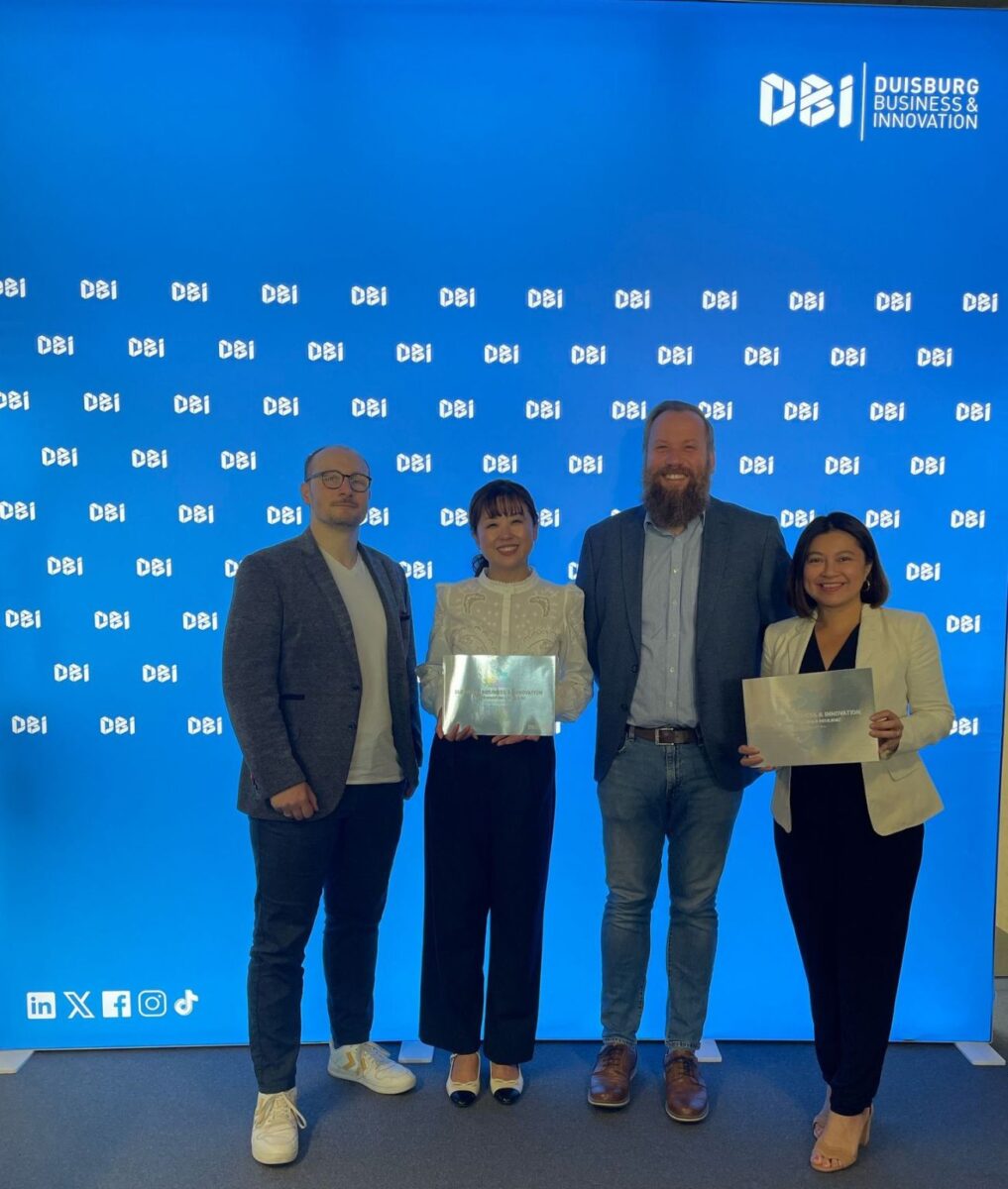
What stood out during our conversation was the immense potential Duisburg holds as a strategic location for international business expansion. Often overshadowed by its larger neighbor Düsseldorf, Duisburg is truly a hidden gem—offering a unique blend of affordability, accessibility, and quality of life.
While Düsseldorf is home to the largest Japanese community in Europe and a well-established hub for Asian businesses, the rising cost of living and operating there is becoming a challenge. That’s where Duisburg shines. Just a 15-minute train ride or 20-minute drive from Düsseldorf, and only 20 km from the international airport, Duisburg offers all the connectivity without the congestion.
But it’s not just about logistics. Duisburg is green, peaceful, and family-friendly. With its abundance of forests, lakes, parks, and canals, it provides a refreshing contrast to the hustle of larger cities. Having moved here from Düsseldorf and Cologne three years ago, I’ve experienced firsthand how much more space and serenity Duisburg offers—making it an ideal place to raise a family and build a business.
That’s why I chose to base my recruitment company, YS Global Search (YSGS), right here in Duisburg. The supportive business environment, combined with a high quality of life, makes it a fantastic place to grow both personally and professionally.
We’re excited about the possibilities ahead and look forward to building stronger bridges between Duisburg and Asia. A big thank you to Dominik and Tim for the warm welcome and inspiring exchange!
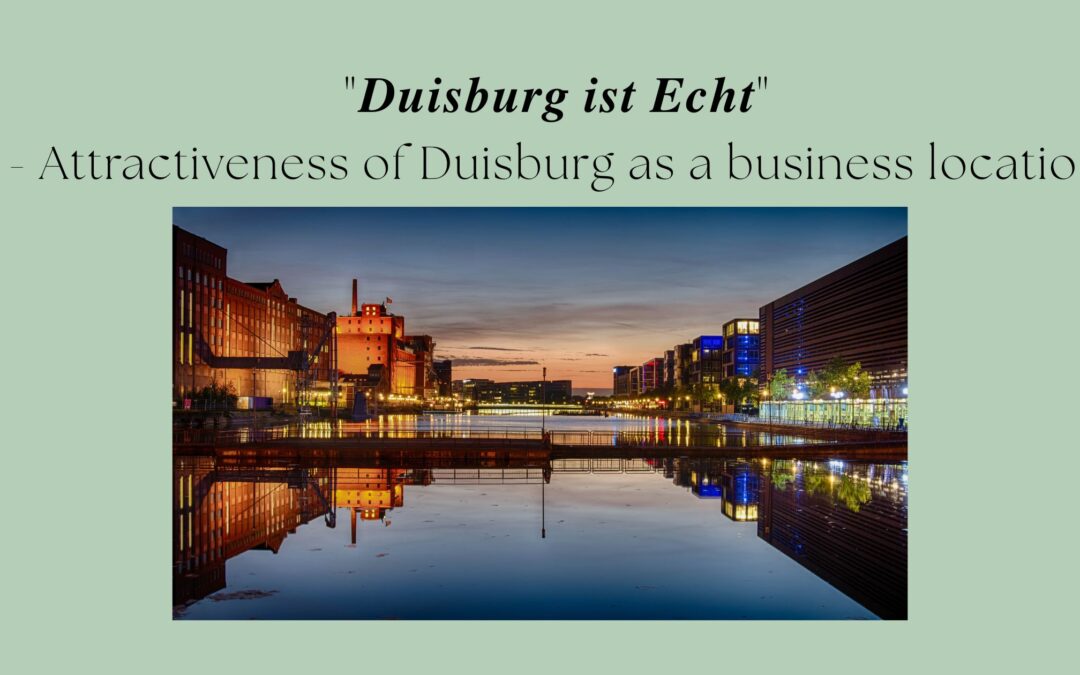
5 Points of Attractiveness of Duisburg as a business location
Here is our discussion on the attractiveness of Duisburg as a business location🤝 ✨
𝟏. 𝐋𝐨𝐠𝐢𝐬𝐭𝐢𝐜𝐬 𝐚𝐧𝐝 𝐈𝐧𝐟𝐫𝐚𝐬𝐭𝐫𝐮𝐜𝐭𝐮𝐫𝐞 Europe’s largest inland port: Duisburg is home to the Port of Duisburg (#Duisport), a major logistics hub linking road, rail and waterways, which is particularly beneficial for trade with Eastern Europe and Asia. Excellent highway and rail connections to the Ruhr region, Germany and beyond. Close proximity to Düsseldorf Airport and other major Western European markets. 𝟐. 𝐀𝐜𝐜𝐞𝐬𝐬 𝐭𝐨 𝐒𝐤𝐢𝐥𝐥𝐞𝐝 𝐋𝐚𝐛𝐨𝐫 As part of the Ruhr industrial region, Duisburg has a large, skilled workforce in logistics, manufacturing, engineering and IT. Strong links with universities and technical institutions (such as the University of Duisburg-Essen) provide talent and research opportunities. 𝟑. 𝐀𝐟𝐟𝐨𝐫𝐝𝐚𝐛𝐥𝐞 𝐁𝐮𝐬𝐢𝐧𝐞𝐬𝐬 𝐚𝐧𝐝 𝐋𝐢𝐯𝐢𝐧𝐠 𝐂𝐨𝐬𝐭𝐬 Compared to nearby cities like #Düsseldorf or #Cologne, commercial real estate and living costs are lower in Duisburg, making it attractive for start-ups and SMEs. 𝟒. 𝐒𝐮𝐩𝐩𝐨𝐫𝐭𝐢𝐯𝐞 𝐁𝐮𝐬𝐢𝐧𝐞𝐬𝐬 𝐄𝐧𝐯𝐢𝐫𝐨𝐧𝐦𝐞𝐧𝐭 Duisburg Business & Innovation and local authorities and chambers offer support services for new businesses, including foreign entrepreneurs. Financial incentives and support programs are available, particularly in the areas of innovation, logistics and sustainable development. 𝟓. 𝐈𝐧𝐝𝐮𝐬𝐭𝐫𝐢𝐚𝐥 𝐚𝐧𝐝 𝐂𝐮𝐥𝐭𝐮𝐫𝐚𝐥 𝐓𝐫𝐚𝐧𝐬𝐟𝐨𝐫𝐦𝐚𝐭𝐢𝐨𝐧 Duisburg is transitioning from heavy industry to a knowledge-based economy with a focus on smart logistics, environmental technology and digitalization. Urban development projects are revitalizing the city and making it more attractive to talent and investors.
Please do not hesitate to contact us if you have any questions regarding recruitment in Germany/Europe. We will be happy to provide you with the latest market trends and information based on our own recent recruitment experience.
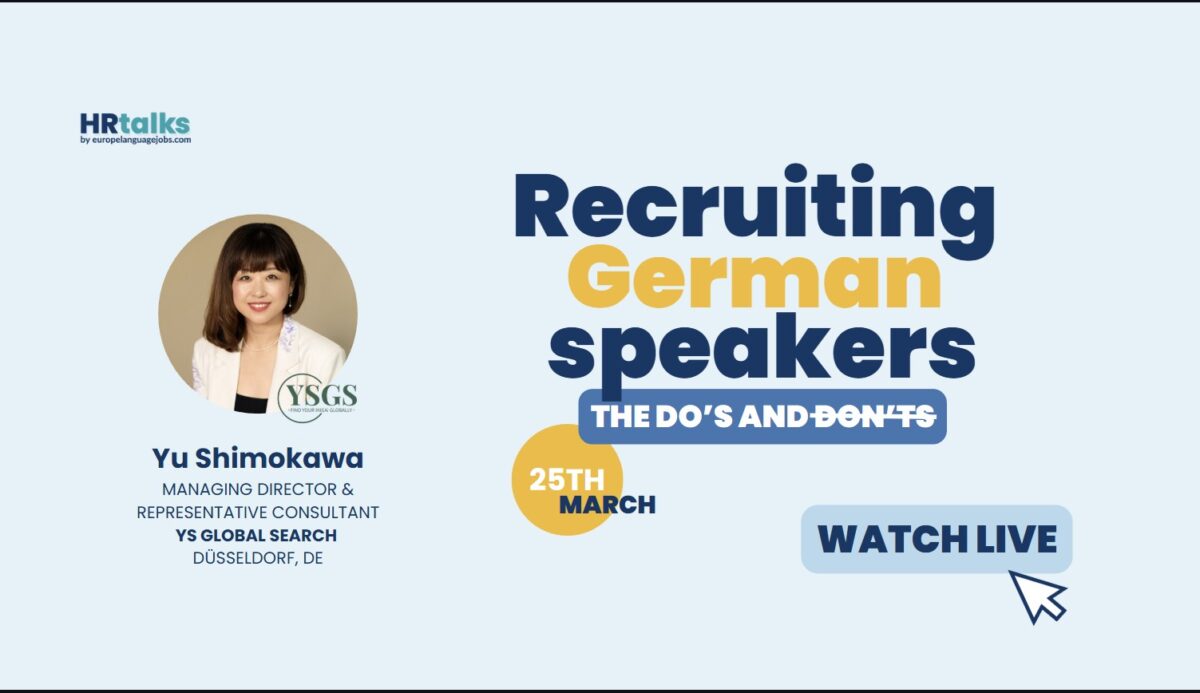
On 25 March 2025, I was the keynote speaker at a webinar on “The Do’s and Don’ts of Recruiting German Speakers” organised by HRtalks by europelanguagejobs.com. Here I would like to summarise and present some of the main topics of the seminar.
Yu Shimokawa
International Executive Recruitment Specialist for local management placements in Germany
15 years of experience as executive search, recruitment, and headhunting consultants in
Recruiting German speakers can be a strategic move for companies looking to expand their reach in German-speaking markets. Based on Yu Shimokawa’s four and a half years of intensive recruitment and executive search experience in Germany, here are some key tips to ensure your recruitment process in Germany is effective and culturally sensitive. Yu has interviewed more than 400 German-speaking candidates. Through her experience, she has found interesting aspects and tendencies of German speakers.
Unique Aspects of German-Speaking Candidates
Work Ethics
German-speaking candidates are known for their cautious, detail-oriented, precise, and punctual nature. They value efficiency and productivity, preferring not to waste time. Building trust with them may take time and effort, but once established, it tends to be strong and long-lasting.
Communication Style
When engaging with German-speaking candidates, it’s important to adapt your communication style. Use formal titles such as Mr., Ms., Mrs., or Dr. to show respect. Approach candidates in a personalized way, providing detailed information about the job, the hiring background, and potential career paths. German candidates are often skeptical of generic job offers, especially those generated by AI, so personalizing your approach can make a significant difference.
Career Progression
Career development is a critical point for attracting candidates in Germany. It’s not just about salary increments or position titles; candidates look for expanded job responsibilities, delegation of authority, management experience, international exposure, and additional training opportunities. Providing benefits and support for family care, such as health and mental care, childcare, and eldercare, can also help retain employees for the long term.
Employer Branding
Employer branding is key to success in Germany’s employee-dominated recruitment market. German-speaking candidates look for companies that offer interesting job responsibilities, attractive benefits, a flexible and healthy working environment, and a positive and supportive company culture. They tend to seek long-term stability and carefully review all details during the application process, often consulting with a lawyer before signing employment contracts.
Salary Expectations
Germany offers some of the highest basic salaries in Europe, especially for office professionals. For example, newly graduated Masters or PhD students with an engineering background can start with annual salaries of between €50,000 and €60,000. Key account managers in B2B manufacturing companies can earn between €100,000 and €120,000, including commission and company car. However, it’s important to note that Germany also has higher social security, state pension and income tax contributions, which can have a significant impact on take-home pay. In addition, the cost of living is high in major cities such as Munich, Berlin, Düsseldorf and Cologne, particularly housing costs.
Attention to Detail
German-speaking candidates are very careful and detail-oriented. When they receive a job offer, many of them check the employment contract with a lawyer. Therefore, it’s common for candidates to have lawyer insurance to ensure their rights and interests are protected.
Click the button below! You can watch the full webinar
Please do not hesitate to contact us if you have any questions regarding recruitment in Germany/Europe. We will be happy to provide you with the latest market trends and information based on our own recent recruitment experience.
In 2024, I have heard a lot of news about CSRD reporting and the need to recruit talent to meet these new requirements in Europe. Many large Japanese companies have their European headquarters in Germany. Therefore, they would like to hire a professional in Germany who understands the requirements for CSRD reporting and handle this project together with the Japanese headquarters. As it is a new trend and regulations, there are not many candidates who have experience in these sustainability issues. It will be a big challenge for many international companies, including Japanese companies in Europe, to handle this properly in the coming years. So I did some research and made a summary about this issue.
Yu Shimokawa
International Executive Recruitment Specialist for local management placements in Germany
15 years of experience as executive search, recruitment, and headhunting consultants in
The new EU directive on corporate sustainability reporting at a glance
According to European Union, The importance of CSR reporting is growing, and the requirements for corporate sustainability reporting are changing fundamentally due to the new EU directive on corporate sustainability reporting (CSRD). After the European Commission published its proposed directive in April 2021, negotiators from the Commission, Council, and European Parliament agreed on a compromise on June 21, 2022. This was formally adopted by the European Parliament and the Council and, after being signed by the President of the European Parliament and the President of the Council, published in the Official Journal of the European Union on December 16, 2022. The directive entered into force on January 5, 2023, and the new rules must be implemented by the member states within 18 months.
Expansion of Reporting Obligations
Certain public interest companies in the EU have been required to report on their sustainability for several years, regulated by the Non-Financial Reporting Directive (NFRD) since 2014. This enables stakeholders to better assess companies’ contributions to sustainability. The CSRD will significantly broaden the scope of application, expanding the number of companies subject to reporting from 11,600 to 49,000 across the EU. The following entities are affected (PwC):
Large companies in the accounting sense
Small and medium-sized enterprises (SMEs) in the accounting sense that are capital market-oriented
Third-country companies with a turnover of EUR 150 million in the EU, whose subsidiaries meet the above size criteria or whose branches achieve a turnover of more than EUR 40 million
Micro-enterprises are excluded from the scope of application.
Implementation Timeline
The CSRD reporting requirements will initially apply to a limited group of companies for financial years beginning on or after January 1, 2024, and will then be gradually expanded (European Parliament):
From January 1, 2024: Public interest entities with more than 500 employees
From January 1, 2025: All other large accounting companies
From January 1, 2026: Capital market-oriented SMEs, unless they opt to defer until 2028
From January 1, 2029: Non-EU companies with a net turnover of more than €150 million within the EU, if their subsidiaries meet the relevant size criteria or their branches have a turnover of more than €40 million
Key Innovations of the CSRD
Extended, Standardized Reporting Requirements: Companies will have to report more comprehensively and according to more uniform standards. The measurability and comparability of the information will be strengthened by greater quantification of the report content using key figures. Initial drafts of the standards are being developed by EFRAG with stakeholder and expert involvement.
New Understanding of Materiality: The CSRD enshrines the concept of double materiality, requiring companies to report on both the impact of their business operations on people and the environment, and the impact of sustainability aspects on the company.
External Audit: Sustainability reporting must be audited externally, similar to financial reporting. The EU Commission has set audit standards, with an initial audit with limited assurance, followed by an audit with reasonable assurance.
Part of the Management Report: Sustainability information must be a mandatory part of the management report, highlighting its importance and aiming to give it the same status as traditional financial reporting.
Uniform Electronic Reporting Format: Since January 1, 2020, certain capital market-oriented companies have been required to disclose their accounting documents in the European Single Electronic Format (ESEF). This requirement will be extended to sustainability reporting, with the European Commission planning to publish its own XBRL taxonomy. (Fin. Connect. NRW)
What the EU’s New CSRD Means for Companies
The CSRD significantly expands existing rules on non-financial reporting. All companies listed on an EU-regulated market (with the exception of micro-enterprises) are covered by the new reporting obligation. Additionally, non-capital market-oriented companies are covered by the CSRD if they fulfill two of the following three criteria (EU thresholds, subject to transposition into national law) (KPMG):
Large Companies – Even Ones Based Outside of the EU
Companies meeting two of the following three conditions will have to comply with the CSRD:
€50+ million in net turnover
€25+ million in assets
250+ employees
In addition, non-EU companies that have a turnover of above €150 million in the EU will also have to comply.
Small and Medium Enterprises (SMEs)
The CSRD will apply to small and medium-sized enterprises (SMEs) that are listed on European markets and meet at least two of the following three conditions:
€8+ million in net turnover
€4+ million in assets
50+ employees
The first reports for SMEs will be due in 2027, though they can opt out until 2028.
It is estimated that this would affect about 50,000 companies in the EU, including 15,000 in Germany alone.
Non-EU vs EU Companies: What’s the Difference?
When it comes to CSRD requirements, the rules are largely the same for EU and non-EU companies – the main difference is in how they qualify for reporting.
EU Companies
EU companies need to comply if they meet any two of these three criteria:
€50+ million in net turnover
€25+ million in assets
250+ employees
Non-EU Companies
Non-EU companies (including those in the UK, US, and other countries) must comply if they:
Have a net turnover of €150 million or more in the EU, and have at least one of the following:
A large EU subsidiary (meeting the EU company criteria above)
A branch in the EU with net turnover exceeding €40 million
Securities listed on EU regulated markets
This means that major international companies doing business in Europe will likely need to report their sustainability impact, even if they’re headquartered outside the EU. For example, a US tech company with significant European revenue and an office in Germany would need to comply with CSRD.
This approach ensures that both European and international companies are held to the same standards of sustainability reporting when operating in EU markets.
Double Materiality Perspective
The new CSR Directive follows a double materiality perspective. This means that companies must record the effect of sustainability aspects on the economic situation of the company and clarify the impact of operations on sustainability aspects. The CSRD requires reporting to include information on:
Sustainability goals
The role of the executive board and the supervisory board
The company’s most significant adverse impacts
Intangible resources not yet accounted for
With the new CSRD, there is no longer the possibility to publish non-financial information in a separate non-financial report. In the future, sustainability information must be disclosed exclusively in the management report. (PwC NL)
Links to the EU Disclosure Regulation and EU Taxonomy Regulation
The EU Disclosure Regulation, or Sustainable Finance Disclosure Regulation (SFDR), obliges credit institutions to disclose sustainability information about their activities and products. To meet these requirements, credit institutions need additional data from the companies to which they lend. Since more companies have to publish sustainability reports with the CSRD, this information is easier for credit institutions to obtain. Companies that are obliged to report on sustainability must also observe the EU Taxonomy Regulation and disclose the extent to which their corporate activities are linked to ecologically sustainable business. (European Union)
Advanced, Unified Reporting Standards
Companies should report according to more comprehensive and consistent standards, with greater quantification of the content for better measurability and comparability. The exact content of sustainability reporting and the cross-EU standards were defined by EFRAG in the European Sustainability Reporting Standards (ESRS). Different standards apply to different types of companies required to report, some of which are still being developed by EFRAG. (European Union)
External Audit Obligation
Like financial reporting, sustainability reporting must also be audited. The testing standard will be gradually expanded from a test with limited assurance to a test with reasonable assurance by 2028. (European Union)
Reporting at Group Level
Subsidiaries do not have to prepare their own reports, except for capital market-oriented subsidiaries. Companies must list the risks and effects of subsidiaries in the management report if they differ significantly from those of the parent company.(European Union)
Global Effects
Though it’s an EU directive, the CSRD also applies to companies based abroad that have a presence in the EU. This means that a hypothetical U.S.-based company with dozens of subsidiaries has to abide by the CSRD if even one of those subsidiaries is in the EU. (Normative)
Impacts Inward & Outward
The CSRD – like the NFRD – requires “double materiality,” which means that businesses will have to disclose not only the risks they face from a changing climate, but also the impacts they may cause to the climate and to society. For businesses that have historically only analyzed the risks posed to them by climate change, this is a call to do some self-reflection. (Normative)
Better Comparability Through Standardization
The CSRD will require company sustainability data to be submitted in a standardized digital format. This is meant to provide a clear format for company sustainability reporting, allowing for better understandability and easier comparison between companies. (Normative)
Influences on Japanese Companies in Europe
The EU’s Corporate Sustainability Reporting Directive (CSRD) will significantly impact Japanese companies operating in Europe. The number of companies affected is estimated to be around 50,000, divided into three broad categories:(PwC Japan)
EU Undertakings
Japanese companies or corporate groups established within the EU that meet certain criteria are considered large companies and are subject to the CSRD. These criteria include sales revenue and the number of employees, regardless of whether they are listed or not. Therefore, European subsidiaries of Japanese companies that are over a certain size are likely to fall into this category. These companies will need to comply with the CSRD starting from January 1, 2025, with the first reports due in 2026.
Third-Country Operators
This category is particularly relevant for Japanese companies. Even companies established outside the EU are subject to the regulation if they have large subsidiaries or branches within the EU and record significant sales within the EU. The CSRD requires disclosure at the corporate group level, meaning that if a Japanese company falls under this category, it will need to disclose global consolidated financial statements. For third-country businesses, the CSRD will apply from January 1, 2028, with the first reports due in 2029.
Environmental Impact Assessment Required
The CSRD mandates a comprehensive assessment of both financial and impact materiality. Companies must evaluate their environmental and social impacts alongside financial risks and opportunities. The European Sustainability Reporting Standards (ESRS) outline the process for materiality assessment, which includes:
Governance: How sustainability is governed within the company.
Strategy: The company’s sustainability strategy and its integration into overall business strategy.
Impact, Risk, and Opportunity (IRO) Management: How the company manages its sustainability impacts, risks, and opportunities.
Metrics and Targets: Specific metrics and targets related to sustainability, such as greenhouse gas emissions.
Third-Party Assurance
The CSRD requires third-party assurance for the entire disclosure content. Initially, this will be limited assurance, but there are plans to transition to reasonable assurance, which is equivalent to current accounting audits. This means that Japanese companies will need to ensure their sustainability information and internal controls are robust enough to meet these assurance requirements.
Practical Steps for Japanese Companies
Identify Scope: Determine which entities within the corporate group are subject to the CSRD based on financial statement figures, number of employees, and capital relationships.
Establish Roles: Clearly define the roles of headquarters and EU bases, involving related companies and departments early on.
Materiality Assessment: Compare the materiality assessment process stipulated in the ESRS with the company’s existing process and integrate any missing elements.
Gap Analysis: Conduct a gap analysis between the ESRS and the company’s current disclosure items to identify areas for improvement.
Documentation: Ensure thorough documentation of the materiality assessment, information gathering process, and internal controls to facilitate third-party assurance. (JRI)
Conclusion
The CSRD represents a significant shift in sustainability reporting requirements, aiming to enhance transparency and accountability. For Japanese companies operating in Europe, this means adapting to new standards and ensuring comprehensive and reliable sustainability disclosures. By proactively addressing these requirements, companies can not only comply with regulations but also strengthen their sustainability practices and corporate value.
Please do not hesitate to contact us if you have any questions regarding recruitment in Germany/Europe. We will be happy to provide you with the latest market trends and information based on our own recent recruitment experience.
Over the weekend, I had the pleasure of visiting Paris, my favorite European city. It’s just a four-hour train ride from Duisburg, where I am based. As many of you know, France and Japan share a strong relationship across various domains, including business, food, culture, art, music, and fashion.
France is home to nearly 800 Japanese companies (794 as of 2022, according to the Ministry of Foreign Affairs), making it the third-largest hub for Japanese businesses in Europe, following Germany and the UK. These companies span multiple sectors, such as automotive (Toyota, Nissan, Nidec), pharmaceuticals (Taisho, Otsuka), food (Ajinomoto, Suntory), imaging (Konica Minolta, Canon, Toshiba), and fashion/cosmetics (Fast Retailing, Shiseido).
Strolling through Paris, I noticed many familiar French shops that also have a presence in Tokyo and other major Japanese cities. Additionally, numerous Japanese-related shops have opened in Paris, catering to French and other European consumers. I also encountered several Japanese-speaking French candidates and French-speaking Japanese candidates, highlighting Paris as an attractive destination for Japanese companies looking to expand their business.
France is also renowned for its top business schools, such as INSEAD and HEC Paris, where experienced Japanese professionals pursue their MBAs. These individuals are often seeking career opportunities in Europe, making France an appealing market for Japanese companies in terms of business expansion and employment.
At YSGS, we assist Japanese companies in their search for experienced professionals across various industries, including automotive, FMCG (food, fashion, cosmetics), pharmaceuticals, medical imaging, IT, and more.
Yu Shimokawa
International Executive Recruitment Specialist for local management placements in Germany
15 years of experience as executive search, recruitment, and headhunting consultants in
The job market in France has shown resilience and positive growth in recent years, despite facing several challenges. This article provides an overview of the economic landscape, employment trends, labor issues, and salary information in France.
Economic Overview
France’s GDP has been growing steadily, with a rate of 3.5% in 2023. This growth is driven by government stimulus packages, increased consumer spending, and investments in infrastructure and innovation. Inflation rates have remained stable around 2%, which helps maintain consumer purchasing power and economic stability (https://gigexchange.com/job-market/job-report-2024/france).
Labor Force and Employment Trends
According to Institut Montaigne and ING, the labor force participation rate has increased to 65%, supported by government initiatives promoting workforce engagement and inclusive policies. The employment rate for individuals aged 15 to 64 has risen from 64.2% in 2016 to 65.6% in 2019. The unemployment rate has decreased from 10.0% in 2016 to 8.1% in 2019, although it has recently shown signs of stabilizing.
Key Industries and Job Opportunities
There is significant job growth in high-tech sectors such as artificial intelligence, biotechnology, and clean energy, driven by government support for research and development. Investments in infrastructure and green energy have created numerous job opportunities in these sectors.
Long-Term Unemployment: Nearly half of the unemployed have been out of work for more than a year, particularly affecting older workers and those with lower educational qualifications.
Youth Unemployment: Youth unemployment remains high at around 14%, with young people facing difficulties in securing stable employment due to a mismatch between their skills and market demands.
Short-Term Contracts: The use of very short-term contracts (less than a week) has increased, contributing to job insecurity and income instability for many workers, especially in hospitality and retail.
Wage Disparities and Inequality: There is a growing disparity in earnings, with low-income workers, particularly in gig economy roles, facing significant financial challenges. This inequality is exacerbated by the rise of independent contractors who often lack adequate social protection.
Labor Disputes: Common issues in labor disputes include wage disagreements, wrongful terminations, and conflicts over working conditions, leading to strikes and other forms of industrial action (OECD).
Regional Disparities: Significant regional variations exist in employment opportunities, with regions like Île-de-France and Auvergne-Rhône-Alpes having robust job markets, while other areas struggle with higher unemployment rates and fewer job opportunities.
Automation and Technological Change: The rapid adoption of automation and AI technologies poses a risk of job displacement in certain industries, particularly affecting workers in manufacturing and administrative roles.
Salary Information
Salaries in France vary widely depending on the industry, region, and job role (Data World Bank):
Average Salaries: The average annual salary for a full-time worker is approximately €44,000, while part-time workers earn around €7,900 annually.
Minimum Wage: As of January 2024, the minimum hourly wage (SMIC) is €11.65.
Industry-Specific Salaries:
Healthcare: Average annual salary is around €73,900, with high-paying roles such as Chief of Surgery (€202,000) and Anesthesiologist (€146,000).
Legal: Average annual salary is about €64,400, with top roles including Crown Prosecution Service Lawyer (€132,000) and General Counsel (€122,000).
Banking and Finance: Average annual salary is approximately €54,200, with key positions like International Banking Manager (€111,000) and Bank Regional Manager (€108,000).
Information Technology: Average annual salary is around €51,100, with roles like AI Implementation Officer (€68,400) and Cybersecurity Manager (€65,200) being among the highest paid.
Human Resources: Average annual salary is about €47,700, with positions such as Chief Human Resources Officer (€81,900) and Director of Talent Acquisition (€76,800) being well-compensated.
Software Engineering: Average annual salary is approximately €46,800, with high-paying roles like Director of Application Development (€69,900) and Solutions Architect (€65,900).
Regional Salary Variations:
Paris: Average monthly salary after tax is about €2,904.
Marseille: Average monthly salary is around €1,992.
Lyon: Average monthly salary is approximately €2,640.
Toulouse: Average monthly salary is about €2,600.
Nice: Average monthly salary is around €2,404.
Bordeaux: Average monthly salary is approximately €2,322.
Nantes: Average monthly salary is about €1,874.
Salary Disparities: The top 10% of earners make an average of €87,720 per year, while the top 1% earn around €263,160 annually (Salary Monitor). The median salary is €42,800 per year (Salary Explore).
Government Initiatives
The French government has implemented various initiatives to address labor issues, including training programs, subsidies for hiring young workers, and reforms aimed at increasing labor market flexibility. However, the effectiveness of these measures is still being evaluated.
Conclusion
The French job market is characterized by positive growth and increasing labor force participation, but it also faces challenges such as youth unemployment, long-term unemployment, and the impact of automation. Addressing these issues will be crucial for sustaining long-term economic stability and growth.
Please do not hesitate to contact us if you have any questions regarding recruitment in Germany/Europe. We will be happy to provide you with the latest market trends and information based on our own recent recruitment experience.
I am pleased to announce that I will be participating as a panelist in a panel discussion at a seminar organised by #NRW.Global Business Japan (#NRW Trade & Investment Promotion Agency Japan, Germany) on Tuesday 12/12 from 14:30 Japan time in Tokyo!
Although it is a face-to-face event, I will be participating online from Germany (I will definitely participate in person next time!).
I will be sharing the latest information from my position as a Duisburg, NRW-based recruiter of local management personnel for Japanese companies in the region!
If you are in Tokyo, please click on the link below to join us!
We look forward to talking with you on the day 😊.
We have been approached by Fabian Hoshino, a former en world colleague who is now working for EY Strategy and Consulting. Thank you for this wonderful opportunity. I am also honoured to be working with Dr Carolina Kawakubo through this event! I believe this will be a very useful event for Japanese companies who want to expand their business in Europe and for Japanese SMEs who want to expand their business in Europe in the future. For more information and to register, please click on the link below!
Date: Thursday, 12 December 2024, 14:30-16:30 (Registration from 14:15) Venue: Andaz Tokyo Rooftop Studios (Toranomon Hills Mori Tower 52F) Access: https://restaurants.andaztokyo.jp/jp/access Language: Japanese Free of charge * This is a face-to-face event Capacity: 50 Application deadline: 6 December (Fri)
Global Business Japan (NRW Trade & Investment Promotion Agency NRW, Germany)
Innovative strategies and an international perspective are required for Japanese small and medium-sized enterprises (SMEs) to become more competitive in the global market. In this workshop, experts from Japan and the German state of NRW will provide concrete solutions and practical advice on the challenges faced by companies looking to expand globally, based on best practice from both countries.
Through a Japanese market-based perspective and NRW success stories, the seminar will delve deep into recruitment strategies, organisational culture adaptation and effective change management practices. In particular, experts from NRW will share with you the latest labour market information and insights into recruitment in Germany, which will provide useful insights for Japanese companies. There will also be networking opportunities for direct exchange of views between Japanese and German experts and other attendees.
This is a valuable opportunity for small and medium-sized enterprises (SMEs) wishing to take their first steps towards overseas expansion to gain a wealth of knowledge and tips for growth. We look forward to your participation! This study session will provide specific information on the impact of new German and EU regulations on Japanese companies.
🎯 This workshop is a great opportunity to learn about international recruitment and network with business professionals who share the same goals.
Please join us and deepen your knowledge.
Target group: Japanese companies interested in doing business in Germany or planning to do so in the future.
📌 Main topics and issues:.
Challenges for Japanese companies in recruiting global talent and how to overcome them.
Strategies for attracting and retaining the human resources needed for global expansion
What are the cultural differences between the Japanese and German labour markets?
Best practices Japanese companies need to know in order to succeed in the German NRW market.
Please note that this event is a business event for people who belong to a company or other organisation, and if we cannot confirm your affiliation, you may not be able to attend.
📣 12/12(火)日本時間14:30〜東京にて行われる #NRW.Global Business Japan (#ドイツNRW州貿易投資振興公社日本法人) 主催のセミナーにパネルディスカッションのパネリストとして参加させていただくことになりました!
Please do not hesitate to contact us if you have any questions regarding recruitment in Germany/Europe. We will be happy to provide you with the latest market trends and information based on our own recent recruitment experience.
November 1st was a holiday in NRW, so I went to Amsterdam to use my time to expand YSGS business. This time I found a lot of attractiveness in Amsterdam. This time I met a potential client to be. This company has the European HQ in Amsterdam and I have maintained the strong relationship in Asia for more than 10 years. My client in Thailand introduced me to the managing director in Amsterdam 3 years ago, but I could not meet him in person due to the covid pandemic. I realized again that it is always better to have a face to face meeting to learn about the client, their business, people and values. The company is one of the largest Japanese hair cosmetic companies, manufacturing hair cosmetic products in Southeast Asia and distributing them all over the world. In Europe, I assumed that they mainly sell their products for professional use, but their main target were Asian, African or Arabic consumers who have dark coloured hair like us, Japanese. It was an interesting discovery and a great understanding of the client’s business and their business strategies.
There are 700 Japanese companies in the Netherlands, the fourth largest Japanese business community after Germany (1947), the UK (928) and France (820), according to the 2023 report of the Ministry of Foreign Affairs of Japan. I have found that Japanese companies are expanding more and more in the Netherlands and I would like to support their organizational growth through my recruitment services.
Yu Shimokawa
International Executive Recruitment Specialist for local management placements in Germany
15 years of experience as executive search, recruitment, and headhunting consultants in
The recruitment landscape in the Netherlands is dynamic and evolving, driven by labor shortages, technological advancements, and changing employee expectations. Key trends include according to the research by the Dutch Recruitment Group, Randstad :
Labor Shortages: High demand for skilled workers, especially in healthcare, ICT, and engineering.
In-Demand Professions: Roles in administration, agriculture, technology, and healthcare are particularly sought after.
Work-Life Balance: Increasing emphasis on flexible working conditions and meaningful work.
Sendcloud: A shipping platform for retailers. Founded in 2012, Sendcloud is a shipping platform that connects retailers with top-rated shipping carriers, making logistics easier and more affordable. The company has raised $200.9 million
Successful companies in the Netherlands use various strategies to attract talent:
Recruitment Agencies and Executive Search Companies: In the Netherlands, many companies leverage recruitment agencies to streamline their hiring processes and access a broader talent pool. These agencies offer expertise in matching candidates with the right skills and cultural fit, saving businesses time and resources. By utilizing extensive databases and networks, recruitment agencies can quickly identify and attract qualified professionals. They also provide valuable market insights, such as salary benchmarks and hiring trends, which help companies stay competitive. Additionally, recruitment agencies assist with compliance and legal requirements, ensuring that all hiring practices adhere to local labor laws. This partnership allows companies to focus on their core operations while efficiently building their teams with top talent.
Online Job Platforms: Utilizing job boards like LinkedIn and Indeed.
Networking and Referrals: Leveraging personal networks and employee referrals.
Job Fairs and Events: Participating in industry-specific events.
Accelerators and Incubators: Joining programs that provide access to talent.
Competitive Benefits: Offering attractive salaries, equity options, and flexible work conditions.
Government Initiatives: Utilizing fast-track immigration schemes for skilled workers.
Employer Branding: Building a strong company culture and brand.
Conclusion
The Netherlands offers a vibrant and supportive environment for businesses and startups. With its strategic location, skilled workforce, excellent infrastructure, and favorable business climate, it continues to attract and nurture innovative companies. Despite challenges like Brexit, the Dutch labor market remains resilient and full of opportunities for growth and success.
Please do not hesitate to contact us if you have any questions regarding recruitment in Germany/Europe. We will be happy to provide you with the latest market trends and information based on our own recent recruitment experience.
I went on a business trip to Berlin over the weekend of 25-27 October. I have been researching the business and recruitment trends in Berlin. Let’s discover 9 key recruitment trends in Berlin and the challenges facing the market!
Yu Shimokawa
International Executive Recruitment Specialist for local management placements in Germany
15 years of experience as executive search, recruitment, and headhunting consultants in
Meeting with a Japanese client in Berlin at Reichstag
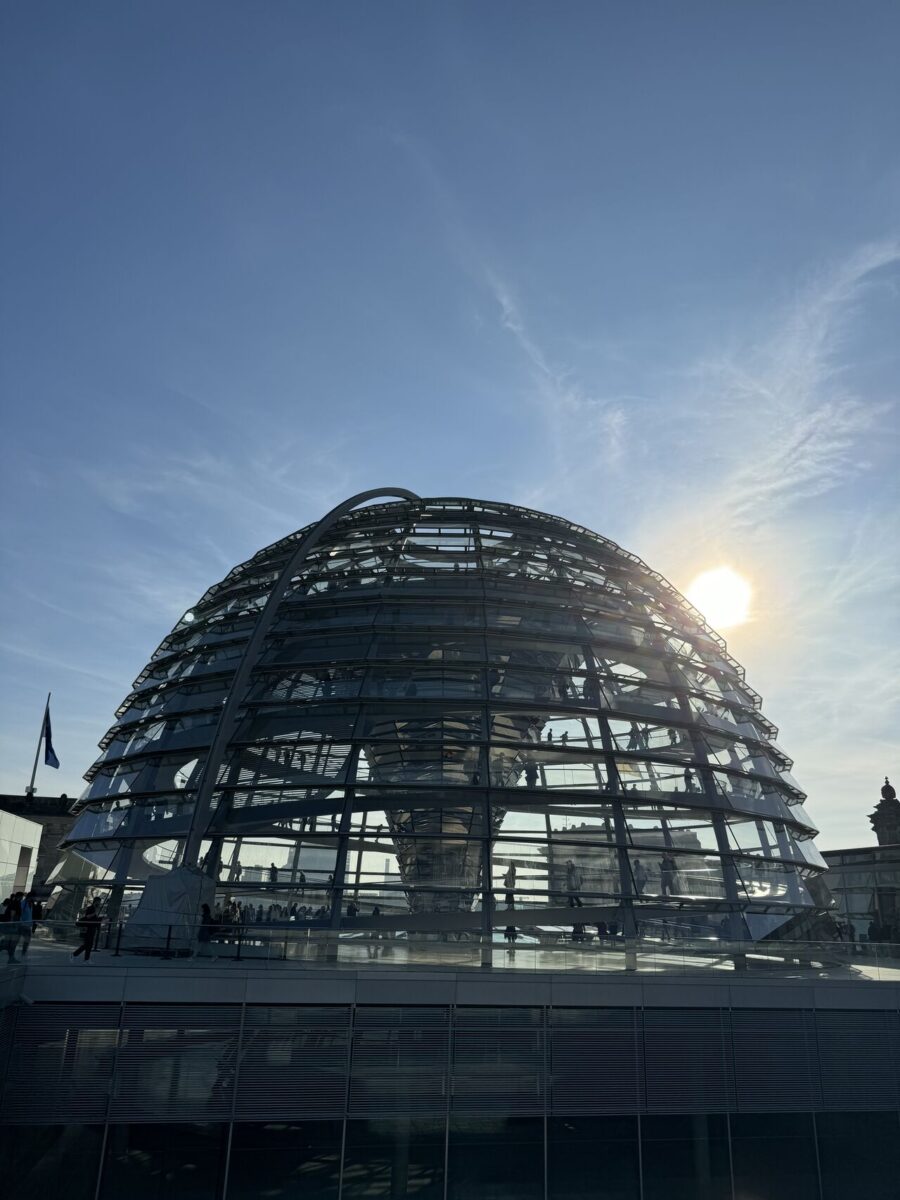
I had a lunch meeting at a restaurant in the Reichstag, the German parliament building, with a new customer who was introduced to us in Japan. As the client was from a construction company, I chose a restaurant on the roof of the Parliament building, the only one in the world open to the public and with an impressive glass dome, which was renovated and designed by the world-famous architect Norman Foster. To enter the building, we entered the building after a strict security procedure, which included registering our personal details in advance and presenting our passports when entering. Fortunately, the weather was very nice and the temperature was about 16°C, which is warm for Germany in autumn, so we took off our jackets and walked up and down the spiral staircase of the dome to get a panoramic view of the city of Berlin.
Face to Face meeting with my placed Candidate
Many Japanese companies are located in Dusseldorf, Frankfurt and Munich, and although Berlin is the capital of Germany, there are still very few Japanese companies with offices in Berlin. However, Berlin is also close to Eastern Europe, where start-ups and international companies gather, and there are many freelancers and artists who are active on their own. In the evening, I had dinner with my placed candidate about 3 years ago. Since I introduced the job during the Corona time, we had only been able to communicate online for last years, but I was very happy to meet him for the first time in person and hear how he is currently working for the company I introduced him to. After Corona, I was able to do all my work online, but I was still very happy to have the opportunity to talk directly with clients and candidates face to face, and to discuss my future career and support them in their business. It was a moment that made me feel the satisfaction and significance of my job as a recruiter.
Why do start-ups choose Berlin for their headquarters?
Start-ups are increasingly choosing Berlin as their headquarters for several compelling reasons:
Large Talent Pool: Berlin attracts a diverse and highly skilled workforce from around the world. The city’s international atmosphere and numerous universities and research institutions provide a steady stream of talent. You can hear many different languages in Berlin. Although it is the capital of Germany, I heard English the most, followed by German. There are also many Spanish, Arabic, French, Dutch and other speakers. International talents come together in Berlin, using their multilingual skills and talents.
The trend towards remote work remains strong. Many companies in Berlin offer flexible working arrangements, including hybrid models and flexible hours, to attract and retain talent. This flexibility is highly valued by employees.
Employee well-being is a top priority. Companies are investing in mental health resources, wellness programs, and initiatives to improve work-life balance. This focus helps attract talent and reduce turnover.
Please do not hesitate to contact us if you have any questions regarding recruitment in Germany/Europe. We will be happy to provide you with the latest market trends and information based on our own recent recruitment experience.
To provide the best experiences, we use technologies like cookies to store and/or access device information. Consenting to these technologies will allow us to process data such as browsing behavior or unique IDs on this site. Not consenting or withdrawing consent, may adversely affect certain features and functions.
Functional
Always active
The technical storage or access is strictly necessary for the legitimate purpose of enabling the use of a specific service explicitly requested by the subscriber or user, or for the sole purpose of carrying out the transmission of a communication over an electronic communications network.
Preferences
The technical storage or access is necessary for the legitimate purpose of storing preferences that are not requested by the subscriber or user.
Statistics
The technical storage or access that is used exclusively for statistical purposes.The technical storage or access that is used exclusively for anonymous statistical purposes. Without a subpoena, voluntary compliance on the part of your Internet Service Provider, or additional records from a third party, information stored or retrieved for this purpose alone cannot usually be used to identify you.
Marketing
The technical storage or access is required to create user profiles to send advertising, or to track the user on a website or across several websites for similar marketing purposes.